Key Points
- A drone roof inspection can capture high-resolution views of shingles, flashing, valleys, roof edges, debris, and storm-related surface damage without requiring an immediate walk on the roof.
- Aerial images are evidence for the next inspection step, not a complete diagnosis. Attic moisture, roof-deck condition, framing, and hidden leaks still require appropriate follow-up.
- If a storm leaves exposed materials, active leaking, or visible displacement, arrange emergency roof repair promptly rather than waiting for a drone report alone.
Why Homeowners Are Asking About Drone Roof Inspections
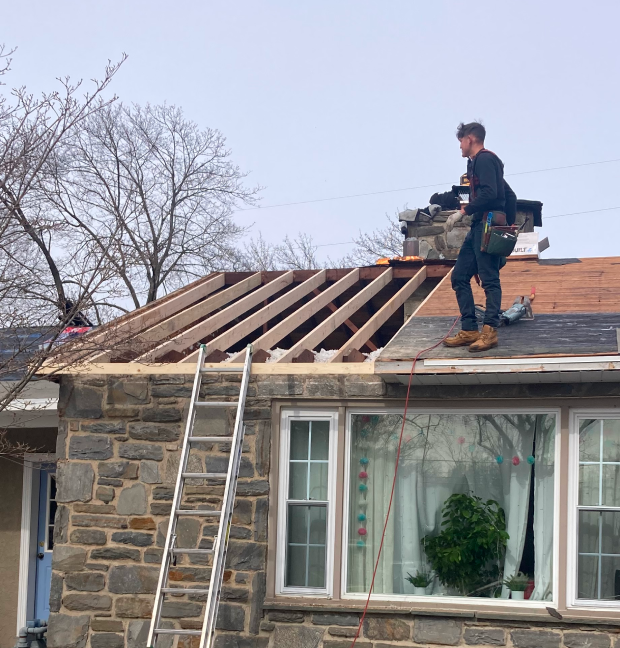
The real concern is usually safety and certainty. Homeowners want to know whether a roof was damaged, but they may not want someone walking across a steep, wet, fragile, or difficult-to-access roof just to obtain a first look.
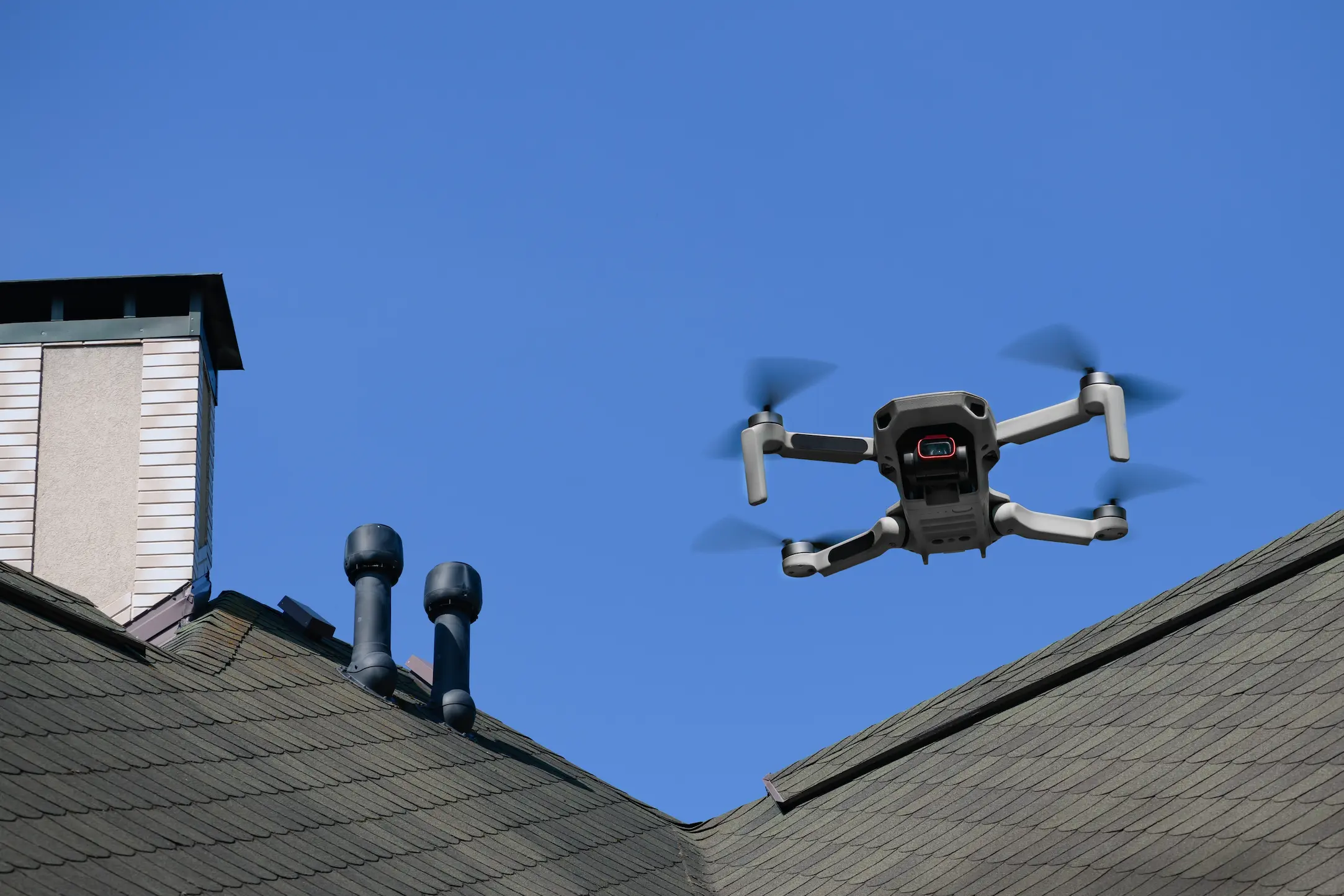
A drone can provide an efficient visual overview of areas that are hard to see from the ground. It may show lifted or missing shingles, damaged flashing, blocked drainage paths, exposed underlayment, fallen branches, or conditions around chimneys and roof valleys. For a Delaware County home with multiple roof slopes or additions, that broader view can help organize the next step.
However, a drone image does not automatically tell you whether water has entered the attic, whether the roof deck is sound, or whether a mark is old or new. The most useful roof inspection combines the images with the homeowner’s observations, interior evidence, weather history, and an appropriate physical assessment.
What a Drone Can Show from Above
A drone-mounted camera can document the roof surface without placing an inspector on every slope. The images may help identify missing, cracked, curled, or displaced shingles; exposed roof materials; damaged ridge caps; debris; visible flashing concerns; and areas where water may be collecting or moving unpredictably.
The value is often greatest when the roof has several intersecting sections. Homes in Swarthmore, Media, Wallingford, Rose Valley, and surrounding Delaware County communities may include additions, dormers, masonry chimneys, and changes in roof pitch. Aerial images can help create a shared visual reference for discussing those areas with the homeowner.
The images can also establish a record after a severe weather event. Compare the aerial evidence with photographs taken before the storm when those photographs are available. Do not assume that every blemish in a roof image was caused by the most recent storm, and do not use an image alone to make an insurance coverage determination.
| A drone may help document | A drone may not confirm by itself |
|---|---|
| Missing or displaced shingles | Whether a leak is active inside the roof assembly |
| Visible damage near valleys or roof edges | The condition of hidden underlayment or roof sheathing |
| Fallen branches and large debris | Whether framing or insulation has absorbed moisture |
| Surface conditions around chimneys and skylights | The precise source of an interior ceiling stain |
| Overall roof geometry and hard-to-see slopes | Whether repair or replacement is the correct final scope |
What a Drone Roof Inspection Cannot Replace
The Federal Aviation Administration treats non-recreational drone work, including using a drone to help provide a service, as an operation governed by applicable FAA rules. Part 107 requirements include keeping the drone within visual line of sight, avoiding careless or reckless operation, observing airspace and altitude rules, and using a properly certificated remote pilot or direct supervision by one.
Those flight rules matter, but they are only one part of a responsible roof inspection. The camera records visible conditions from above. It does not test the moisture level inside the roof assembly, verify the condition of framing, or replace a safe attic and interior review.
A professional should explain the limits of the images. If the report identifies possible damage, the next step may be a closer roof assessment, attic inspection, moisture evaluation, temporary protection, or emergency roof repair. The right path depends on what the evidence shows.
When a Drone Review Should Lead to a Closer Inspection
Arrange additional evaluation when you see an active interior leak, damp insulation, ceiling staining, missing roof covering, exposed underlayment, displaced flashing, or a roof edge that has pulled away. An aerial view can help locate the area, but it should not be used as a reason to delay action.
For general preparation, see Strath Haven’s complete Delaware County roof inspection guide and mastering roof inspections guide. These resources can help you understand why roof-surface images and interior evidence need to be considered together.
How Drone Inspections Fit into Emergency Roof Repair
After a summer storm, homeowners often face a difficult choice: wait for a full appointment or call for emergency roof repair immediately. The practical answer depends on whether the roof is open to weather or the interior is actively taking on water.
If shingles are missing but the roof deck appears covered and there is no active leak, a documented inspection can help determine the next repair step. If there is a hole, exposed underlayment, water entering the attic, or damage near electrical components, protect occupants and contact a roofing professional promptly. Temporary measures may be needed before permanent work can be scheduled.
Do not climb onto a storm-damaged roof to obtain your own evidence. A ground-level photo, an interior photo, and a description of when the problem appeared can be useful. Strath Haven’s emergency roofing repair services and emergency roofing repairs guide provide relevant next-step resources.
A Simple After-Storm Documentation Checklist
- Photograph the exterior from the ground before moving debris, if it is safe to do so.
- Photograph ceiling stains, damp insulation, or visible interior water entry.
- Record the date of the storm and when you first noticed the issue.
- Keep notes about temporary protection or emergency work that was performed.
- Ask whether aerial images are available and what areas they actually show.
- Request a written explanation of recommended repair, temporary protection, and any unresolved conditions.
The checklist is for documentation, not for making a roof claim or diagnosis. If electrical components are wet, avoid contact and follow appropriate safety guidance.
How to Evaluate a Drone Inspection Report
A useful report should connect each image to a roof location and explain what the image does and does not establish. Ask whether the report identifies the roof slope, visible defect, recommended next step, and urgency. A collection of attractive aerial photos without interpretation may not answer the question you actually have.
Ask these practical questions before relying on the report:
| Question | Why it matters |
|---|---|
| Who operated the drone? | Commercial operations may require FAA Part 107 compliance. 1 |
| What areas were captured? | Trees, neighboring structures, roof geometry, or weather may limit visibility. |
| Were attic and interior conditions checked? | A surface image cannot confirm hidden moisture or framing damage. |
| Which findings require emergency action? | Openings and active leaks should not wait for routine scheduling. |
| What is the recommended repair, and why? | Homeowners need a scope tied to observed evidence. |
| What remains uncertain? | Honest limitations prevent an image from being treated as a complete diagnosis. |
A trustworthy roofer should be willing to explain uncertainty. If the images are inconclusive, the correct answer may be an additional inspection rather than an immediate replacement recommendation.
How Drone Images Can Support a Roof Replacement Decision
Drone images can help show widespread surface wear, repeated storm damage, extensive granule loss, or multiple problem areas. They may also help a homeowner understand why a roofer is recommending broader work. They cannot, by themselves, establish the remaining service life of every roofing layer.
A roof replacement decision should consider the roof’s overall condition, the extent of repairable damage, the condition of the deck and flashing, previous repair history, and the homeowner’s long-term plans. Our guide to roof repair versus roof replacement explains why the right answer is not always the largest scope.
If the roof is near the end of its service life, coordinating repairs, flashing, ventilation, skylights, and other penetrations may prevent repeated tear-offs. Strath Haven’s roofing installation services can be discussed after the inspection establishes what the roof actually needs.
Choose an Inspection That Connects Images to Action
A drone can make a roof inspection safer and more informative, especially when the roof is steep, complex, or difficult to access. Its value depends on what happens next: the images should be interpreted alongside interior and attic evidence, and urgent damage should move quickly into emergency roof repair when necessary.
Strath Haven Roofing & Restoration has served Delaware County since 1992. Homeowners can also review the company’s full roofing and restoration services before scheduling an assessment. The team’s full-time specialists can help homeowners understand whether a concern calls for documentation, a closer inspection, emergency protection, targeted repair, or a broader roofing plan.
Schedule a comprehensive roof inspection with Strath Haven Roofing & Restoration. The team will explain what the inspection shows, identify what still needs to be verified, and help you determine the next step, with no pressure and no surprises.
FAQ: Drone Roof Inspections and Emergency Repair
Is a drone roof inspection enough to diagnose a leak?
No. A drone can document visible roof conditions, but it cannot confirm hidden moisture, framing damage, attic conditions, or the precise source of an interior stain. Those findings may require additional inspection.
Can a drone inspection be used after a storm?
It can help document visible conditions from a safer vantage point, but homeowners should not climb onto a damaged roof. If there is active leaking, an opening, exposed materials, or a safety hazard, contact a roofing professional promptly.
Should I repair or replace the roof after a drone inspection?
The images alone should not decide that question. Compare the visible damage with the roof’s age and condition, the roof deck, flashing, prior repairs, and the extent of the problem. A written assessment should explain why repair or replacement is recommended.